THE IMARAT

A Core Element Within The Madinan Model of Islam

Abdullah Luongo     Cape Town, South Africa

In 1331 during the dynamic rule of the Khalifah Orhan Ghazi the town of Iznik, which had been part of the Byzantine Empire until it was captured by his father Osman Ghazi in 1302, became the new Muslim capital.  It was in Iznik that we see the first Imarat established by the Khalifah.  Significantly, a second Imarat was later built in the same city, this time by Nilufer Hatun, the wife of Orhan Gazi, setting an important precedent that continued with other great women in Islam. Continue reading “THE IMARAT”
Financial Crisis Fiqh Conference

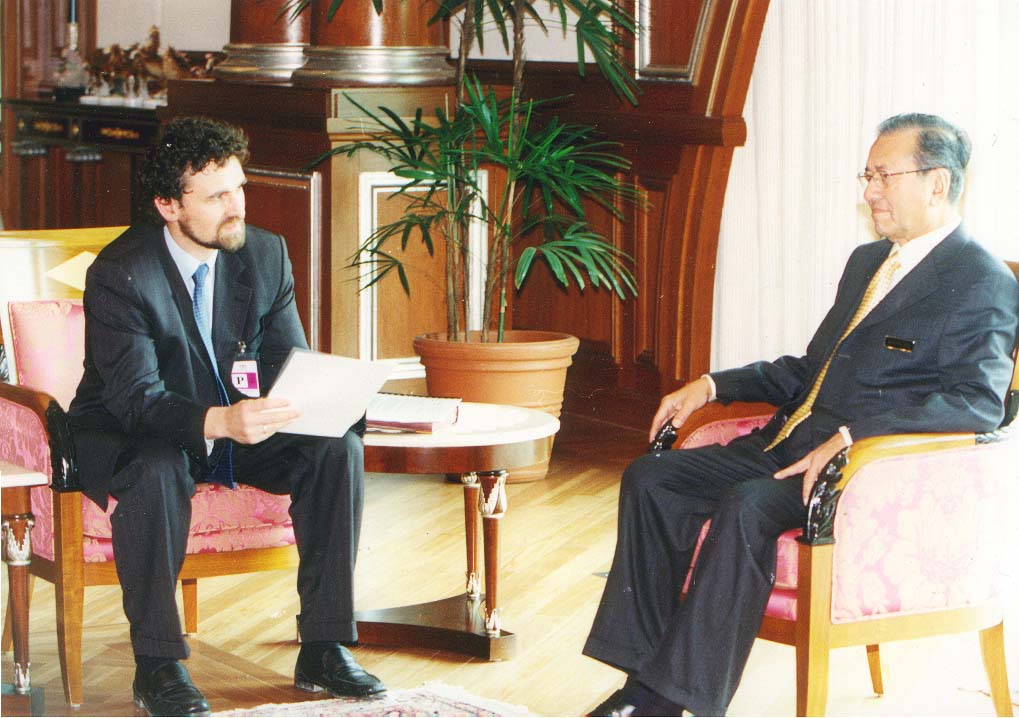
11th Fiqh Conference Cape Town 2008

Shaykh Dr. Abdalqadir as-Sufi, Umar Pasha Vadillo,

Dr. Habib Dahinden

__________________________

The Collapse of the Monetarist Society

I, II, and III – Internet Articles

Shaykh Dr. Abdalqadir as-Sufi

________________________________

Please click on the pdf below and the next screen

Financial system talks


The Murabitun in the Eyes of the ‘Ulama of the Ahl as-Sunnah

Abu Miftah – Islamic Historian

There are jama’ahs among the Muslim community that have existed for thousands of years establishing jihad fisabilillah – al-Murabitun is one of them. Nowadays they urge us to return to the ‘amal of the Prophet Muhammad, sallallahu ‘alayhi wa sallam, and the Sahaba, in upholding the Zakah and the Mu’amalah with Dinars and Dirhams.

In the history books written by the ‘ulama of the Ahl as-Sunnah, the role and service of the Murabitun communities is often referred to as establishing the greatness of Allah’s deen – Islam. So, who are these Murabitun? Continue reading “The Murabitun in the Eyes of the ‘Ulama of the Ahl as-Sunnah”

From ibn Juzayy al-Kalbi

Commentary on;

“Remember Me and I will remember you”.

(Remember Me. I will remember you)

Sa’id‚ ibn al-Musayyib‚ said that it means remember Me by obedience and I will remember you with reward. It is said that you remember Me by supplication and glorification, etc. The commentators have said many things, especially the Sufis when they explain this subject by using expressions with specific meanings while there is no proof that it is specific. In general, this ayah‚ clarifies the nobility of dhikr and it is explained by the words of the Messenger of Allah as related from his Lord; “I am in My slave’s opinion of Me and I am with Him when He remembers Me. When he remembers Me in himself, I remember him in Myself. If he mentions Me in an assembly, I mention him in a better assembly than his.  There are three types of remembrance; Continue reading “From ibn Juzayy al-Kalbi”

Miftāhu’l-Wird

The Miftahu’l-Wird, or ‘Key to the Source’, is the name of the collection of portions of the Qur’an and Du’a collected together by Shaykh Muhammad ibn al-Habib al-Idrisi al-Hasani for his fuqara.

Wird can mean a part or section but here, as the title suggests it is a means of arriving at water for the thirsty. It also has the meaning of arriving at water after having been without it and an element of time as in the watering of animals at particular times of day. This relates also to the traditional daily gathering of the fuqara after Subh and Maghrib to recite it together. For the people of the path it is literally a quenching that revives and fortifies. It has the power that water does for the man parched by the sun. Continue reading “Miftāhu’l-Wird”

KHUTBAH 12th November 1999 – Norwich, England

If we look at the world we live in with the eyes of the dominant culture, which is hard not to, given the all-pervasive nature of information dissemination, we will see a society in rapid change, with ever-shifting values. This makes it difficult to know where, and who we are, where we are going and even where we have come from.While the whole world seems to be swept along on a hurricane of delusion and deceit, the Muslim who stands by what Allah has revealed to him through His beloved Rasul, sallallahu alayhi wa sallim, remains firm like a mountain. Whatever comes to him, he always washes and stands before his Lord five times a day. He does as commanded and avoids what is forbidden. The degree of his firmness is his holding to the Shari’ah following in the footsteps of the Prophet and his companions. Continue reading “KHUTBAH 12th November 1999 – Norwich, England”